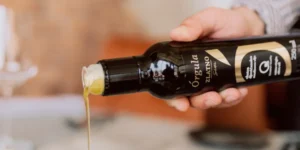
Olive oil is one of the healthiest foods you can put into your body. This is the conclusion of numerous analyses and scientific studies that prove the beneficial effects of regular consumption of quality extra virgin olive oil; from its positive impact on preventing cardiovascular diseases, anti-inflammatory and anticancer effects, beneficial effects on skin and hair health to blood pressure regulation, diabetes prevention and weight management.
Aware of the above characteristics, more and more people are including olive oil in their daily diet, so the demand for this healthy food is increasing, and a wide selection of different oils from different manufacturers can be found on the shelves. Since the nutritional value of olive oil depends on several factors, it is extremely important to know how to choose a quality oil, that is, it is important to use an oil that will realize all the beneficial effects on health with its wealth of nutrients.
How to recognize quality olive oil?
When we talk about the highest quality olive oil, we are talking about extra virgin olive oil, which is obtained directly from the olive fruit by mechanical processing and without the use of chemical or other additives, or by the process of cold pressing or cold processing. In this sense, it is important that the processing temperature is below 27 oC. For the quality of the oil, it is very important that the fruit is processed as soon as possible after harvest (up to 24 hours), and the moment of harvest, or the degree of ripeness of the olive, is also important because at the optimal moment of ripeness it may contain slightly less oil, but it will have the most favorable chemical composition that results in the highest quality of the final product. When we talk about ways to choose quality oil, every average consumer should know how to recognize high-quality extra virgin olive oil. What sets such oils apart from other oils is their fresh fruity scent, most often of olive fruit (green or ripe), fresh grass, olive leaf, another fruit (apple, banana, almond) or vegetable (artichoke, tomato, rocket, etc.), and a pleasant and balanced bitterness and spiciness. The harmony and persistence of the oil’s aromatic and taste properties represent a higher level of quality and are typical characteristics of champion olive oils. The information on the declaration (label) provides the first information for the consumer, and the declaration of the product category – extra virgin olive oil – is the basic information indicating a high-quality product. There are great differences in the properties and intensity of bitterness and spiciness of individual olive oils, but also in consumer preferences. Therefore, it is always recommended to taste olive oil before purchasing a larger quantity. A pleasant fresh fruity scent, bitterness and spiciness are essential characteristics that extra virgin olive oil must have.
Important information we obtain through chemical analysis
If you are among those who like to hear what the legal framework says on a certain topic, then it is important for you to know that according to the European Commission Regulation (EU) 2016/2095 of 26 September 2016 amending Regulation (EEC) No. 2568/91 on the characteristics of olive oil and olive-pomace oil and on the relevant methods of analysis, which also represents the legal framework for the Republic of Croatia, extra virgin olive oil contains a maximum of 0.8% free fatty acids (expressed as oleic acid) and a peroxide value that should be lower than 20 meq O2/kg. In addition to the above basic quality parameters, chemical analysis determines K-numbers as well as other important parameters that prove whether it is a drop of the highest quality olive oil. The organ of olive oil is regularly controlled, and their quality is proven by numerous awards as well as the quality mark “Croatian quality”.
Characteristic taste and smell
Given the fact that quality olive oil has a strong, characteristic taste and smell, more experienced olive oil lovers will easily recognize quality oil by tasting and smelling it. It should be emphasized that the color of olive oil is not an indicator of its quality. The color can vary from a pronounced green, yellowish green to shades of brown green or yellowish brown. Likewise, the color of the oil changes as the oil ages and is sensitive to light. Therefore, dark packaging is necessary for proper storage of the oil and to protect it from photooxidation. The taste, smell and intensity of the oil can vary, but they decrease as the oil ages. Olive oil has the highest quality and the most pronounced aromatic and taste properties immediately after processing. With proper storage of the oil (cool spaces without foreign odors, in appropriate packaging – stainless steel containers or glass packaging, protection with inert gas), the qualitative properties can be preserved for up to 18 months to two years after production. The bitterness of olive oil is a positive property and is the result of the presence of phenolic compounds of a hydrophilic nature (they dissolve in water). These are natural antioxidants present in the olive fruit and in the oil itself, and they have a protective role for the body during consumption, but also for the oil itself (they act as ‘preservatives’ since they protect the oil from aging, i.e. from oxidation processes). In addition, these compounds significantly affect the sensory properties of the oil. In order to achieve pronounced aromatic notes and balanced bitterness and spiciness, timely processing is important, as is the method of processing the olive itself and extracting the oil. The Orgula Group processes olives in its oil mill in Marušići using a modern centrifugal processing method, immediately after harvest, which has a certificate for ecological processing of olives and exclusively uses the cold processing method, which preserves important nutrients in the oil. Oils are stored exclusively in stainless steel tanks with inert gas as additional protection against oxidation.
A trick or two in the kitchen
So, if you want to be sure that you are buying and consuming a quality product, when choosing olive oil, pay attention to the product packaging because it already reveals a lot of details to us – is the bottle dark, glass? You should pay attention to whether the declaration is clearly marked, what is the country of origin and expiration date, whether there are additional quality marks that guarantee health safety and ecological processing, protected designations of origin or geographical origin. All of these are indications that indicate a high-quality product and guarantee the quality and properties of a particular oil. It is always better if the bottle we have in the kitchen is of a smaller volume, so that the oil we use is used up as quickly as possible and thus has as little contact with oxygen from the air as possible. It is advisable to have at least two types of olive oil in the household: one with a pronounced fruitiness, bitterness and spiciness that we will put on the table and use as an addition to the dish at the end, before serving, so that it will retain all its nutritional properties and enrich the food we serve with specific aromas. For this use, we recommend Orgula GOLDEN extra virgin olive oil from Croatian olive groves, which will give each dish a special taste and value. Other oils can have milder organoleptic properties, such as Orgula Extra Virgin Olive Oil Tradition (1 l), which makes it ideal for cooking and frying – yes, that’s right. Namely, high-quality olive oils can and should be used in the preparation of dishes because, due to their relatively high smoke point (around 170-180 oC), they are stable even at elevated temperatures. Therefore, it is best to start preparing food with cold or slightly warmed olive oil.