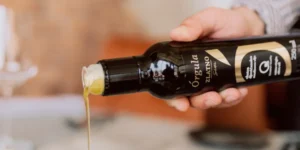
After several years of reduced olive harvests, coupled with droughts that have affected Europe and the resulting price increases, Orgula company director Pjero Zekan emphasizes that this year’s olive processing has achieved record results, which brings optimism among olive oil producers and consumers. Due to the large volume of the harvest and the high interest of olive growers in processing, an extended processing period is expected, which will last until December.
“We are currently recording record activity at our oil mill in Marušići. Although oil yields are slightly lower, a very good overall production is expected – perhaps even twice as high as last year. Purchase prices at the oil mills have fallen by approximately 10 to 15 percent compared to last season and are now around 8-9 euros per kilogram,” Zekan pointed out.
Record results
As he explained, unlike last year, this year’s conditions for growing olives were extremely favorable, from flowering to harvest. Without major problems with insects or pests, the olives were preserved and ready for processing earlier than usual, thanks to good weather conditions and the September rain that improved the dry summer months.
Last year, the Orgula oil mill in Marušići processed around 600 tons of olives, with an average yield of 15 percent, resulting in the production of around 90 thousand liters of oil. This year, it is expected to process more than 1,200 tons, which could yield over 150 thousand liters of olive oil.
New markets and new opportunities
Orgule, as the market leader in retail in the olive oil segment in Croatia, announces the expansion of the distribution of its olive oils to France, Germany and Poland.
“We are particularly pleased that Croatian olive oil is increasingly ranked among the best in the world and is increasingly in demand in countries outside the Mediterranean. Each placement of our products is also an opportunity to emphasize the unique structure of Dalmatian olive groves, which are traditionally enclosed by dry stone walls. This method of cultivation means that harvesting is mostly done by hand, which allows the fruits to remain undamaged and preserve their natural aroma and freshness. Although this method is demanding, it is key to obtaining a top-quality product, thereby confirming our commitment to quality and tradition,” added Nataša Jazbinšek Zekan , Director of Operations at Orgula.
Recovery of European olive groves
After a challenging period of poor harvests caused by drought and climate change, the new harvest in Mediterranean countries has also begun with optimistic forecasts for increased yields. In addition, olive oil prices began to fall sharply in early November, and even Spain, which, as one of the largest producers, dictates trends, has recovered.
“Currently, olive trees and fruit are in excellent condition, and Spain is forecast to produce 1.3 to 1.5 million tons of olive oil, which represents more than a 20 percent increase over the five-year average, almost equal to the total production in the last two years,” Zekan commented.
This recovery comes after three years of extremely poor harvests and extremely high prices. Globally, total annual production is expected to be 3.25 million tonnes, with the highest production volume forecast for December and January, when around 80 percent of planned quantities will be produced. Raw material prices are also expected to fall significantly, with a return to the usual level of 4-5 euros per kilogram during 2025.